
The Trust Deficit
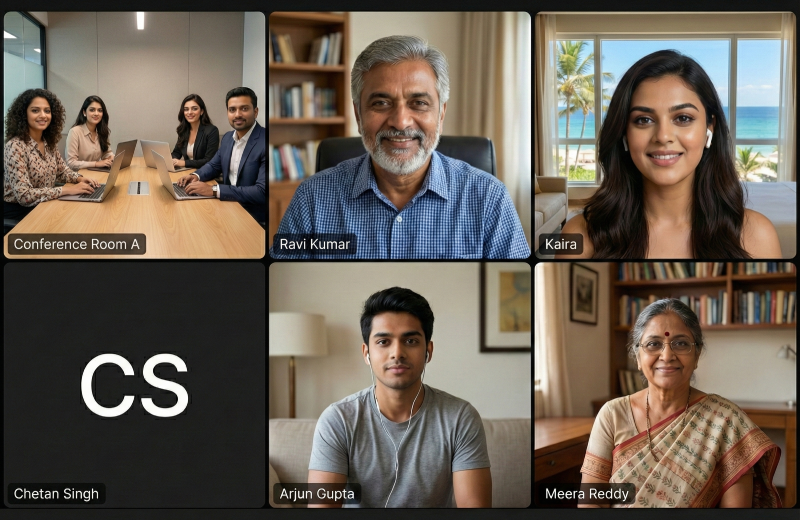
The raging debate between "Return to Office" mandates and "Remote Forever" often misses the point entirely. It isn't really about where people sit; it's about how they are managed. If you feel anxiety when you can't physically see your employees working, you don't have a location problem; you have a trust problem. You are managing by presence, not by performance.
The traditional office model relied on "management by observation." If you were at your desk, you were working. Remote work breaks this lazy proxy. It forces managers to measure what actually matters: output. If the work is done well and on time, does it matter if the employee took a nap at 2 PM? This shift is uncomfortable, but it is necessary.
Managing Output, Not Hours
Distributed teams fail when companies try to replicate the office environment online endless Zoom status meetings, "green dot" surveillance tools, and an expectation of instant response. This leads to digital burnout and "Zoom fatigue." They succeed when the focus shifts to clear goals, documented processes, and asynchronous communication.
Writing becomes critical. Companies like Amazon run on "6-page memos" rather than PowerPoint decks because writing forces clarity. When you define exactly what "done" looks like in writing, you empower your team to execute without constant hand-holding. This shift requires better management, not just better software.
The Global Talent Advantage
The massive upside of mastering remote operations is the expansion of your talent pool. If you require everyone to come to an office in your specific zip code, you are limiting yourself to the best talent within a 10-mile radius. That is a tiny slice of the world. By building a remote-first culture, you can hire the best talent in the world, often at more competitive rates.
But building culture remotely requires intention. It doesn't happen by accident at the water cooler. It happens through regular, structured check-ins, celebrating wins publicly, and respecting work-life boundaries. Remote work is a skill, and like any business skill, it requires expertise to master.